The Infrastructure Behind the Institutional Agentic Economy
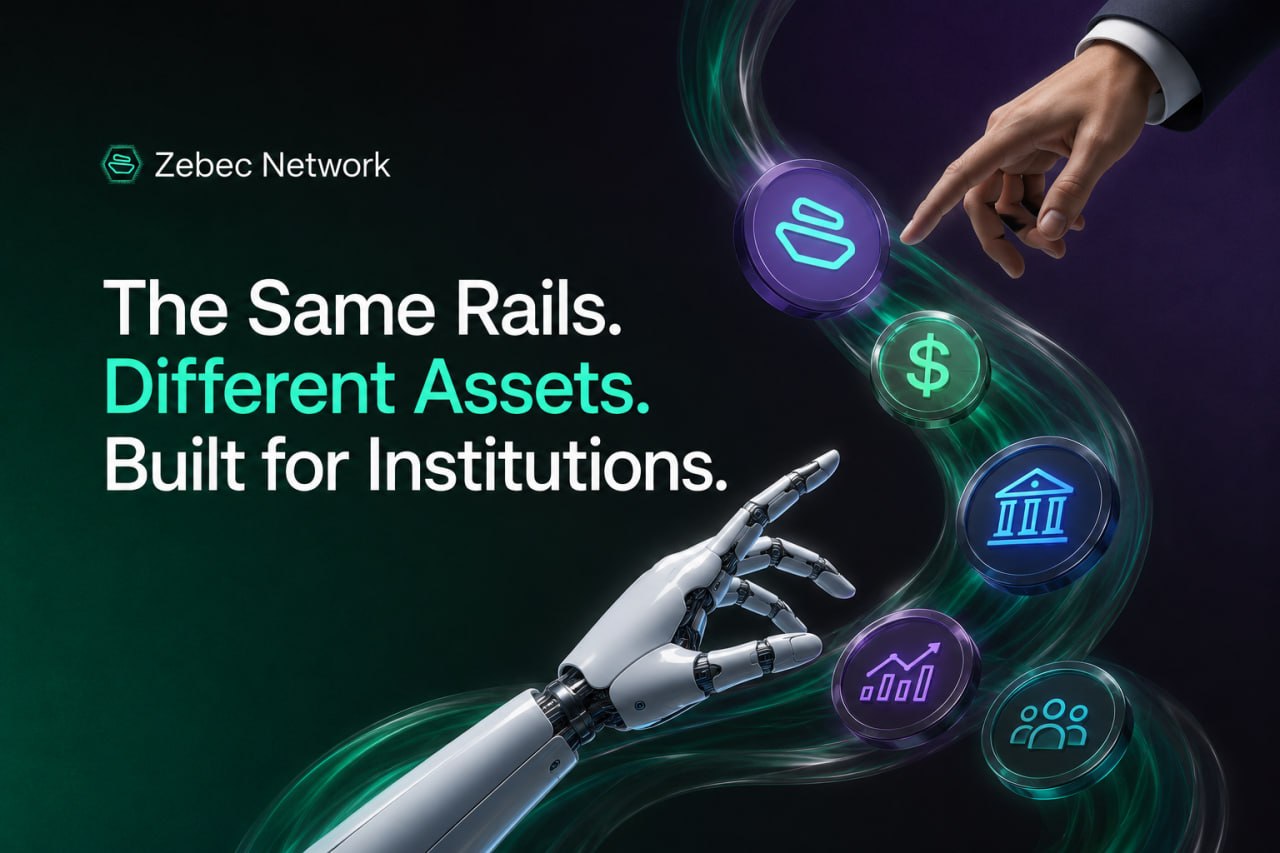
Zebec's treasury and card infrastructure extends beyond USDC, to private chains, institutional stablecoins, and the compliance requirements that come with them. This is the next piece in our Agentic Economy Series. Part 1, Part 2, Part 3
This series on the agentic economy explores a simple idea: the financial infrastructure agents need already exists. Zebec's treasury, payroll, and card rails are what connect those agents to the real-world economy today. Read more: Part 1, Part 2, Part 3
As enterprises begin running agents at scale, a new set of requirements comes into focus, ones that have less to do with functionality and more to do with compliance, jurisdiction, and institutional risk tolerance. The infrastructure answer to those requirements is the same. The settlement layer is not.
USDC was the first major enterprise stablecoin to achieve meaningful scale, but it will not be the last. Financial institutions, asset managers, and regulated issuers are increasingly launching their own digital dollars and digital euros, designed for specific jurisdictions, customer bases, and compliance frameworks.
From bank-backed euro stablecoins to emerging institutional settlement assets, the direction is becoming clear: enterprises are unlikely to operate with a single stablecoin. They will operate across many.
The case for private chain settlement
Public blockchain infrastructure works well for most use cases. For some enterprises, regulated financial institutions, government-adjacent organisations, multinationals operating across jurisdictions, it introduces exposure they can't accept: public transaction visibility, unpredictable counterparty risk, regulatory ambiguity.
USDCx is USDC on permissioned, private chains built specifically for institutional compliance. Same programmability. Same settlement speed. Same card infrastructure on top. The difference is that transactions settle on infrastructure the institution controls, with visibility and access scoped to permissioned participants only.
Zebec is currently integrating its USDCx enterprise payroll infrastructure with Aleo and Canton, two of the most advanced privacy-focused, institutional-grade blockchain networks being built today. These integrations will extend compliant, real-time payroll and payment capabilities to ecosystems purpose-built for enterprise adoption, confidentiality, and regulated financial applications.
USD1 and the emerging stablecoin ecosystem
USD1 is a different kind of extension. Where USDCx addresses institutional infrastructure requirements, USD1, issued by World Liberty Financial, represents something broader: a stablecoin building real distribution from the ground up, with a growing ecosystem of operators, businesses, and agents transacting on it.
What that ecosystem has lacked is a production-ready layer for spending in the real world. A treasury that streams USD1. Cards that convert it to purchasing power anywhere Mastercard is accepted. Spend controls scoped to the agent, the task, the category.
That layer exists now. The card rails don't change. The settlement asset does.
The rails don't change. The asset does.
Earlier we made the case that connecting agents to existing treasury infrastructure isn't a new product, it's the same product applied to a new recipient type. That logic holds here too.
The slight tension worth naming directly: adding USDCx and USD1 support could read as "new infrastructure." It isn't. The treasury primitives, the card issuance layer, the KYC model, the spend controls — none of that changes. What changes is which asset settles through those primitives, and on which chain.
That's not a new product. That's a configuration.
One KYC. Any asset. Any chain.
The practical implication is the same as it was for USDC: one compliance event at the account level, covering every agent card issued under it, regardless of which stablecoin funds the treasury or which chain settles the transaction.
Same infrastructure. Same card. Same rules. The rails were always designed to be asset-agnostic. Institutions are just now giving them a reason to be.
Other Articles