Your Treasury Already Knows How to Pay Agents. It Just Hasn't Been Asked.
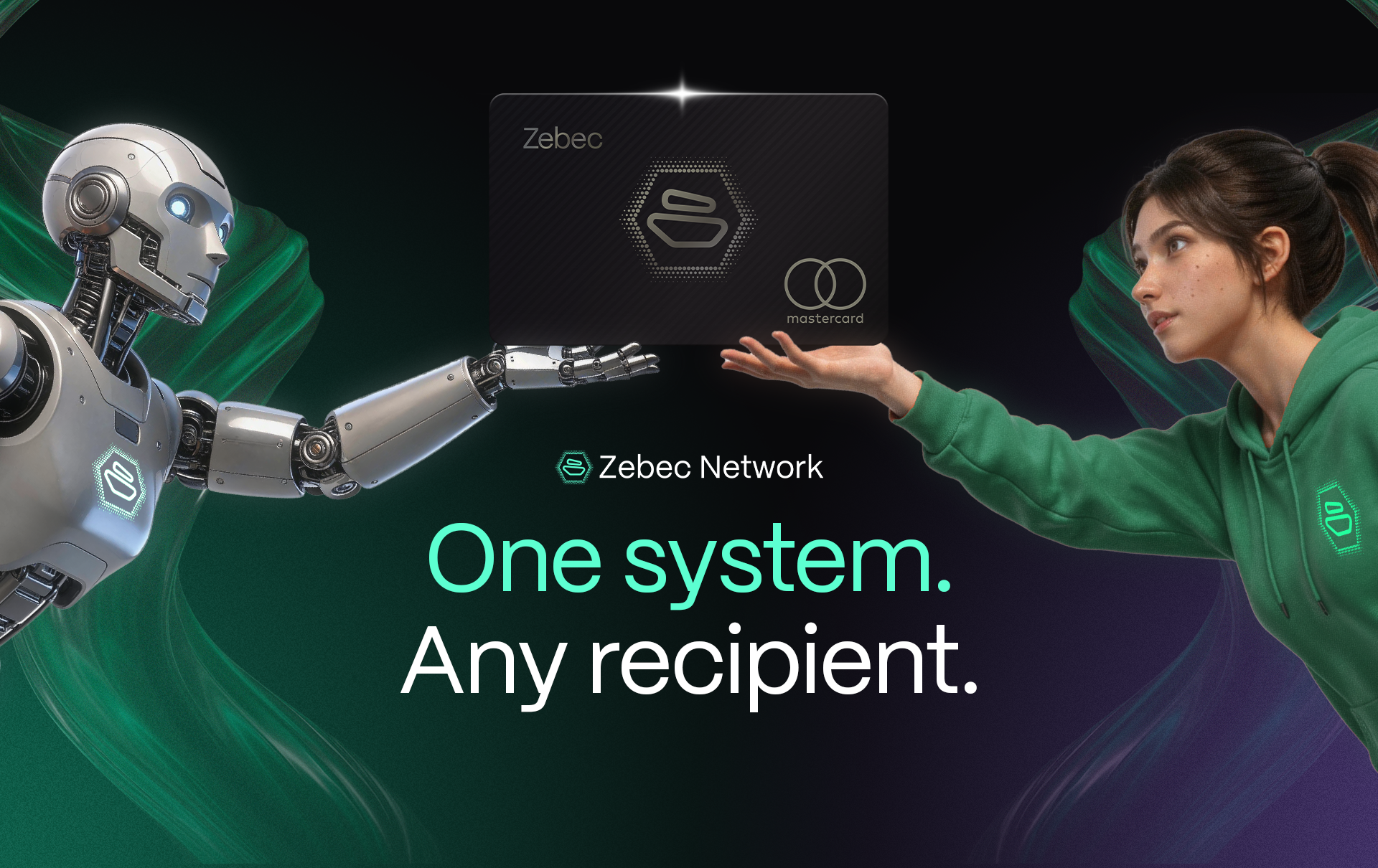
Zebec built programmable payroll infrastructure before AI agents were a category. The same rails that pay your team can fund your agents — cards, spend controls, and real-time settlement included. (For why agents need financial infrastructure in the first place, start here.)
Agents aren't just spenders. They can earn. But before an agent can earn, it needs a way to operate in the financial world as it exists today.
A lot of the conversation about agentic payments treats the problem as unsolved: agents need wallets, agents need identity, agents need new financial infrastructure that doesn't exist yet. That framing is understandable. It's also a few steps ahead of where most organisations actually are.
The more immediate question isn't how to build new financial infrastructure for agents. It's how to connect agents to the financial infrastructure that already exists — the treasury, the payroll stream, the spend controls that companies have already set up for their human teams.
That connection is what Zebec built.
Agents are just another recipient type
When you set up a payroll stream in Zebec, you are defining a relationship between a treasury and a recipient. You specify who gets paid, how much, under what conditions, and what they can spend it on.
There is no fundamental reason that the recipient has to be a human employee.
An AI agent running your marketing operations has the same financial requirements as a contractor: it needs a budget, it needs to spend within defined limits, and someone needs to be able to see what it's buying and revoke access if something goes wrong. The governance problem is the same. The infrastructure requirement is the same.
The same treasury that streams wages to your team can stream an operational budget to your agents. Same rules engine. Same asset. Same controls.
Zebec Cards are the bridge
Stablecoin wallets are useful for on-chain commerce. The vast majority of what agents actually need to buy — cloud infrastructure, advertising, SaaS tools, logistics services — lives in the traditional card payment world. Merchants don't accept USDC. They accept Mastercard.
A virtual card linked to a stablecoin treasury is what makes an agent functional in the real world. It converts the programmable budget in an agent's wallet into purchasing power that works everywhere Mastercard is accepted.
Zebec already issues those cards, through its white-label infrastructure, to businesses managing teams. Extending that to agents is not a new product. It is the same product, applied to a recipient type that happens to be growing very quickly.
One KYC. Human employees and agents, side by side.
A company running Zebec for payroll can, from the same dashboard, fund both its human employees and its AI agents from the same treasury. KYC happens once, at the account level. Every agent card issued under that account is covered — no additional compliance overhead per agent, no bottleneck that scales with the number of agents deployed.
One treasury. One compliance event. Unlimited agents, each with its own card, its own budget, and its own rules.
The infrastructure doesn't care whether it's paying a person or a process. Neither does the card. Agents are just what it was always missing.
Other Articles