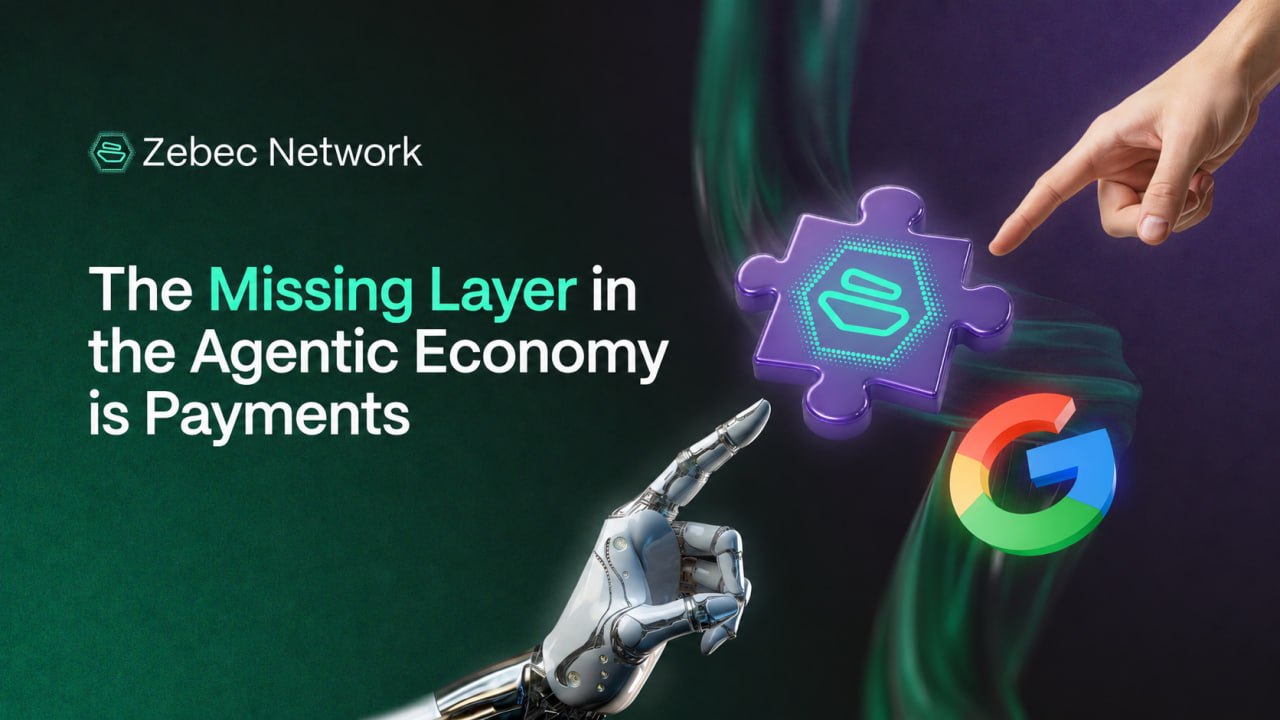
The Missing Layer in the Agentic Economy Is Payments
From AI Assistants to AI Operators
Google’s latest AI announcements make one thing increasingly clear: the industry is moving beyond AI assistants and toward persistent AI workflows capable of operating continuously across tasks, applications, and services.
At Google I/O, much of the focus shifted toward delegated actions, background task execution, AI-assisted commerce, and integrated workflows across the broader Google ecosystem. The framing matters because it signals a transition from AI as a tool that responds to prompts toward software capable of operating with increasing autonomy.
The Missing Layer
The conversation around agentic AI often centers on intelligence, reasoning models, and orchestration frameworks. Much less attention is paid to the financial infrastructure agents need in order to operate in the real world.
An agent handling marketing operations may need to purchase advertising inventory. A workflow agent managing cloud infrastructure may need to pay for compute resources. A creator-focused agent operating across YouTube subscriptions, sponsorships, and digital services may need access to recurring budgets and merchant payment rails.
In other words, agents require more than wallets. They require treasury access, spending permissions, and programmable controls.
Why This Connects Naturally to Zebec
Zebec originally developed streaming payment technology to modernize payroll and treasury management. Instead of batch payments and delayed settlement cycles, funds can move continuously in real time, governed by programmable rules defined at the treasury level.
Those same primitives map naturally to autonomous systems.
A treasury can stream operational funding to an agent wallet. Spending limits can restrict purchases to approved merchants or categories. Virtual cards can be scoped to specific workflows, whether cloud infrastructure, SaaS subscriptions, advertising platforms, or creator operations.
The human organisation defines the rules once, while the infrastructure enforces them automatically.
Commerce Still Runs on Payment Rails
Much of the current discussion around AI agents assumes entirely new financial systems must be built from scratch. In practice, the near-term challenge is simpler: connecting agents to the treasury systems and payment infrastructure companies already use.
Google’s broader ecosystem direction reinforces this idea. Google Wallet integrations, subscription ecosystems, YouTube monetization flows, and persistent AI workflows all point toward software operating increasingly inside commercial environments rather than isolated chat interfaces.
Agents do not live entirely on-chain. Neither does commerce.
The Infrastructure Question
As AI agents evolve from assistants into operators, the need for programmable financial infrastructure becomes less theoretical.
Importantly, this does not mean agents become independent legal or financial entities. They remain extensions of human or corporate accounts, governed by treasury controls, permissions, and compliance frameworks established at the account level.
The next generation of software will not simply generate content or answer questions. It will coordinate workflows, manage recurring operations, purchase services, and increasingly participate in economic activity.
And once software begins operating continuously, it also requires continuous financial access.
The Same Problem Zebec Was Built to Solve
That is where stablecoins, programmable treasury infrastructure, streaming payments, and card rails begin converging into something larger than payroll.
We didn’t build Zebec specifically for AI agents.
But as major technology platforms move toward operational AI systems, the infrastructure requirements increasingly resemble the exact problem Zebec was originally designed to solve: programmable movement of money, governed by rules, operating continuously in real time.
Other Articles