Zebec Network (ZBCN) Tokenomics
Updated January 2026
ZBCN is the governance and utility token of the Zebec Network, supporting decision-making, product usage, and ecosystem incentives. Token utility is driven by governance rights, payroll and product fees, staking, incentives, and real-world spending, rather than base-layer transaction gas, reflecting Zebec’s evolution into a multi-chain and multi-product financial network.
Token supply dynamics are mature and increasingly deflationary, with early investors having realized returns and final unlocks scheduled for March 2026. This design aligns long-term token value with network usage, governance participation, and sustainable business growth.
TL;DR
- Core utility includes payroll product fees, staking, real-world card spend, incentives, and ecosystem participation
- Supply contraction outpaces supply expansion, resulting in negative net inflation
- Powers on-chain voting and ecosystem decisions
- Unlocks staking rewards and collateral in DeFi integrations
- Recurrent token buybacks are linked directly to product revenues
- Funds grants for ecosystem contributors
ZBCN Utility
ZBCN is a utility token whose demand is driven by real product usage and volumes, spanning payroll fees, SuperApp functionality, staking, incentives, and real-world spending, rather than transaction execution at the base protocol layer.
At Its Core
ZBCN is the network evolution of the original Zebec Protocol token, ZBC. The transition to the ZBCN ticker in mid-2024 reflected Zebec’s expansion from a payments-focused protocol on Solana into a multi-chain and multi-product financial network.
ZBCN remains the exclusive native token of the Zebec Network, preserving the original supply and tokenomics framework established under ZBC while significantly expanding utility across payroll, cards, governance, and ecosystem incentives.
Payroll and Product Fees
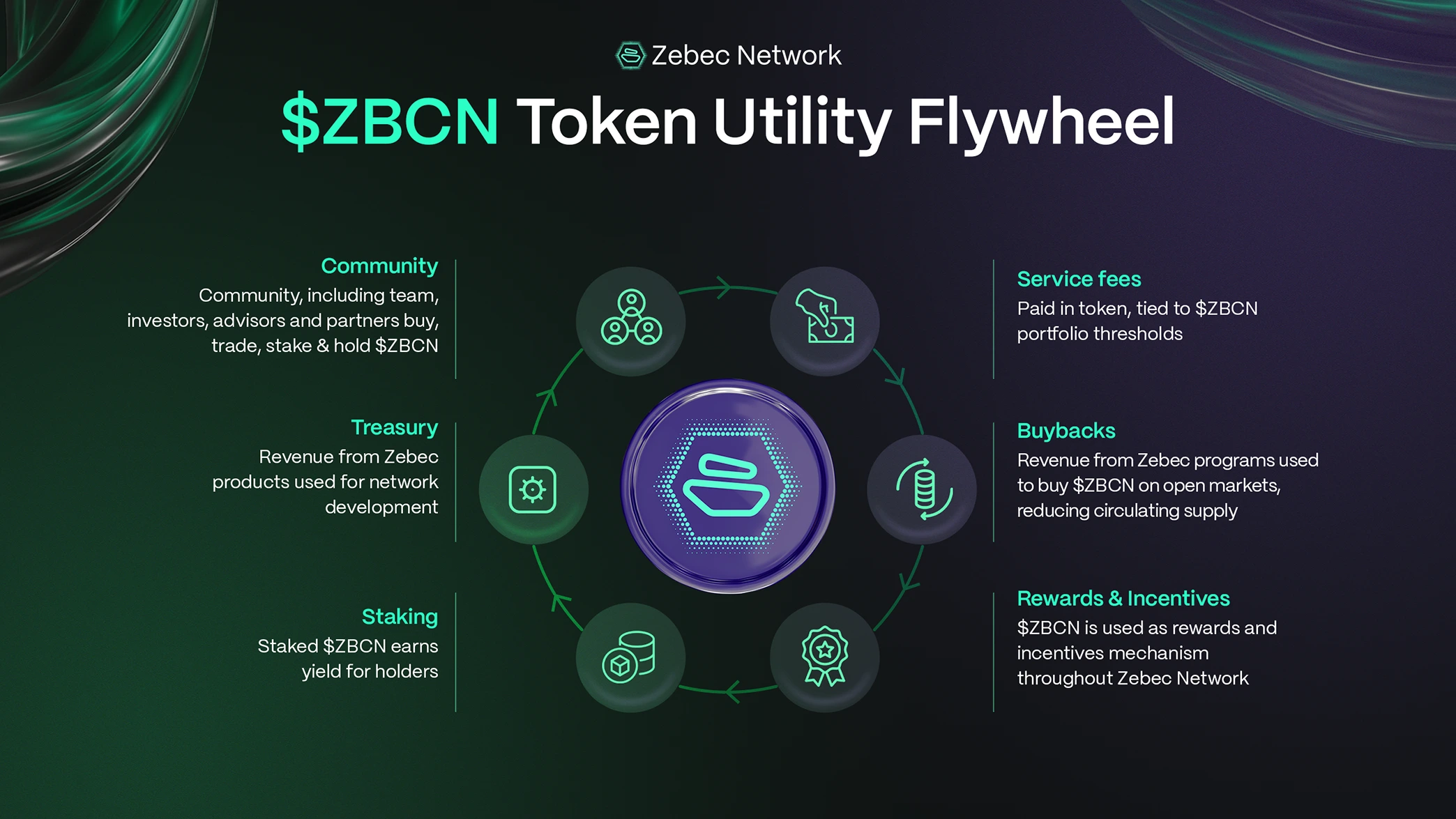
The primary utility of ZBCN is to settle fees required for employers to use Zebec’s payroll and disbursement products.
Institutional clients and employers using Zebec’s payroll platform are required to pay service and product fees in ZBCN. Employers may:
- Hold ZBCN directly to cover these fees, or
- Use stablecoin balances, which are automatically converted into ZBCN at the time fees are assessed
This mechanism creates ongoing, usage-driven demand for ZBCN directly tied to payroll volume and enterprise adoption.
SuperApp Fees and Incentives
With the rollout of the Zebec SuperApp, ZBCN will remain a core access and incentive asset across payroll, treasury, card, and rewards functionality. Holding and using ZBCN within the SuperApp unlocks enhanced features, preferential pricing, and reduced or eliminated fees across select products.
These incentives apply across multiple participation paths, including holding, usage, and staking creating flexibility for both employees and employers to benefit from ZBCN without requiring a single mode of engagement.
In addition, starting mid-2026, ZBCN balances and participation levels within the SuperApp will unlock tiered rewards on Zebec Card spend, with higher tiers receiving enhanced benefits.
This structure encourages long-term alignment with the ecosystem while directly linking ZBCN participation to everyday usage.
Zebec Cards
ZBCN can be used to fund all Zebec Cards, enabling real-world spending in fiat at merchants globally. Alongside more than 150 supported tokens, ZBCN holders may spend their tokens for everyday purchases, bridging on-chain value with traditional payment networks. ZBCN balances staked within the SuperApp will unlock reward tiers for users of Zebec Cards starting in mid-2026.
Staking
ZBCN holders may stake tokens to earn yield and deepen their participation in the network. In addition to yield and governance rights, staking contributes to higher incentive tiers within the Zebec SuperApp, further reducing fees and unlocking additional features and rewards.
Staking is one of several mechanisms through which users can access enhanced SuperApp functionality, complementing holding and active product usage.
ZBCN staking will transition to a module within the Zebec SuperApp from January 2026 onward, with updated staking terms to be released alongside the transition.
DeFi Collateral
ZBCN may be used as collateral in supported DeFi integrations, enabling payroll-based borrowing and lending as integrations expand.
Network Rewards and Ecosystem Incentives
ZBCN is used to reward participation across the Zebec Network, including pilot initiatives such as ZePIN, ecosystem grants for developers and integrators, and community-driven contributions that expand network functionality.
ZBCN holders may unlock:
- Reduced or zero fees on select Zebec products and product features
- Priority access to premium Zebec Cards and programs
- Eligibility for partner airdrops and ecosystem incentives
- Invitations to exclusive Zebec-hosted events and ecosystem initiatives
Allocations, Unlocks, and Token Maturity
Zebec’s early institutional and venture backers have realized significant returns on their initial investments and continue to support and contribute to the long-term growth of the Zebec ecosystem.
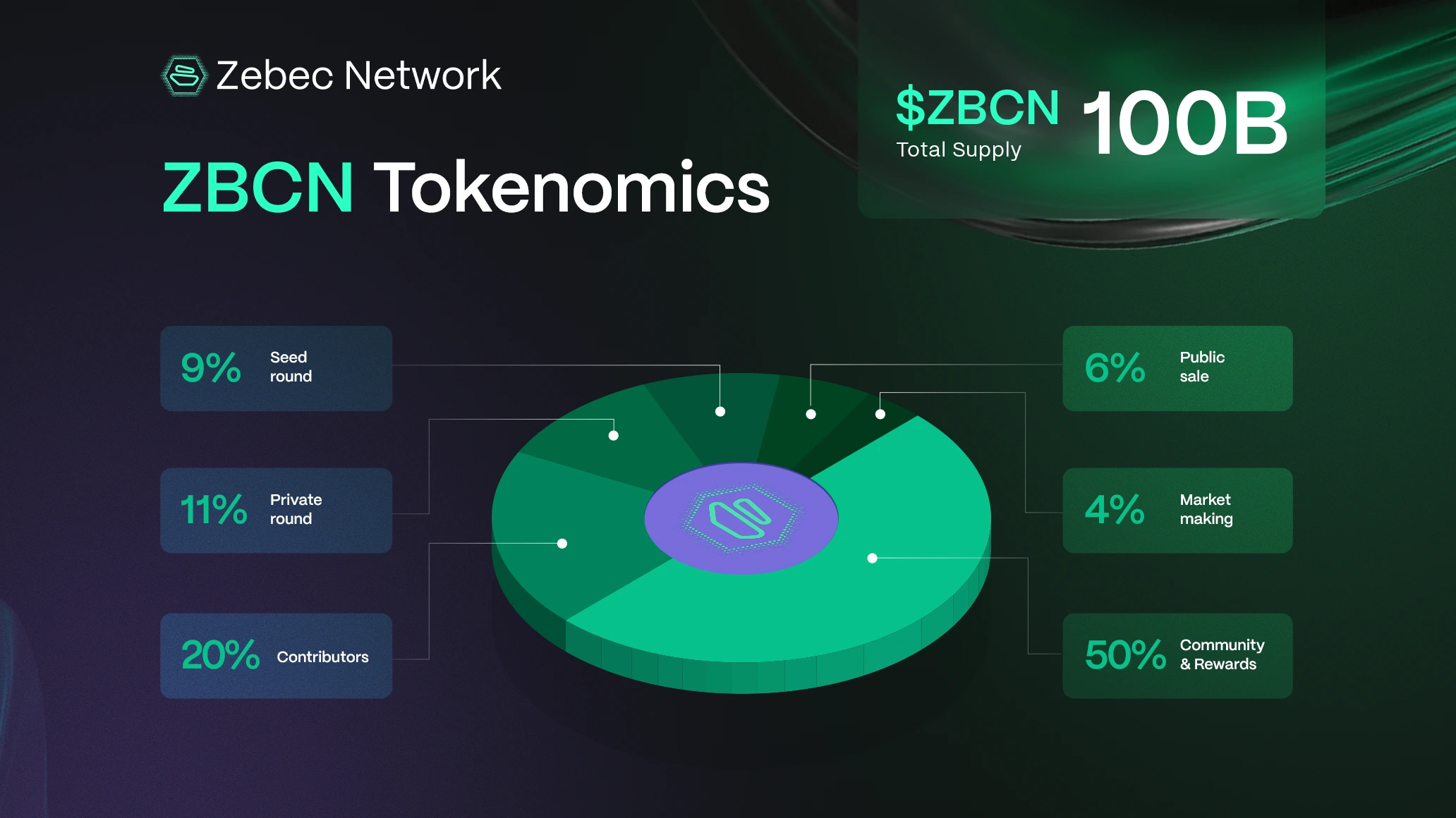
Fully Distributed by March 2026
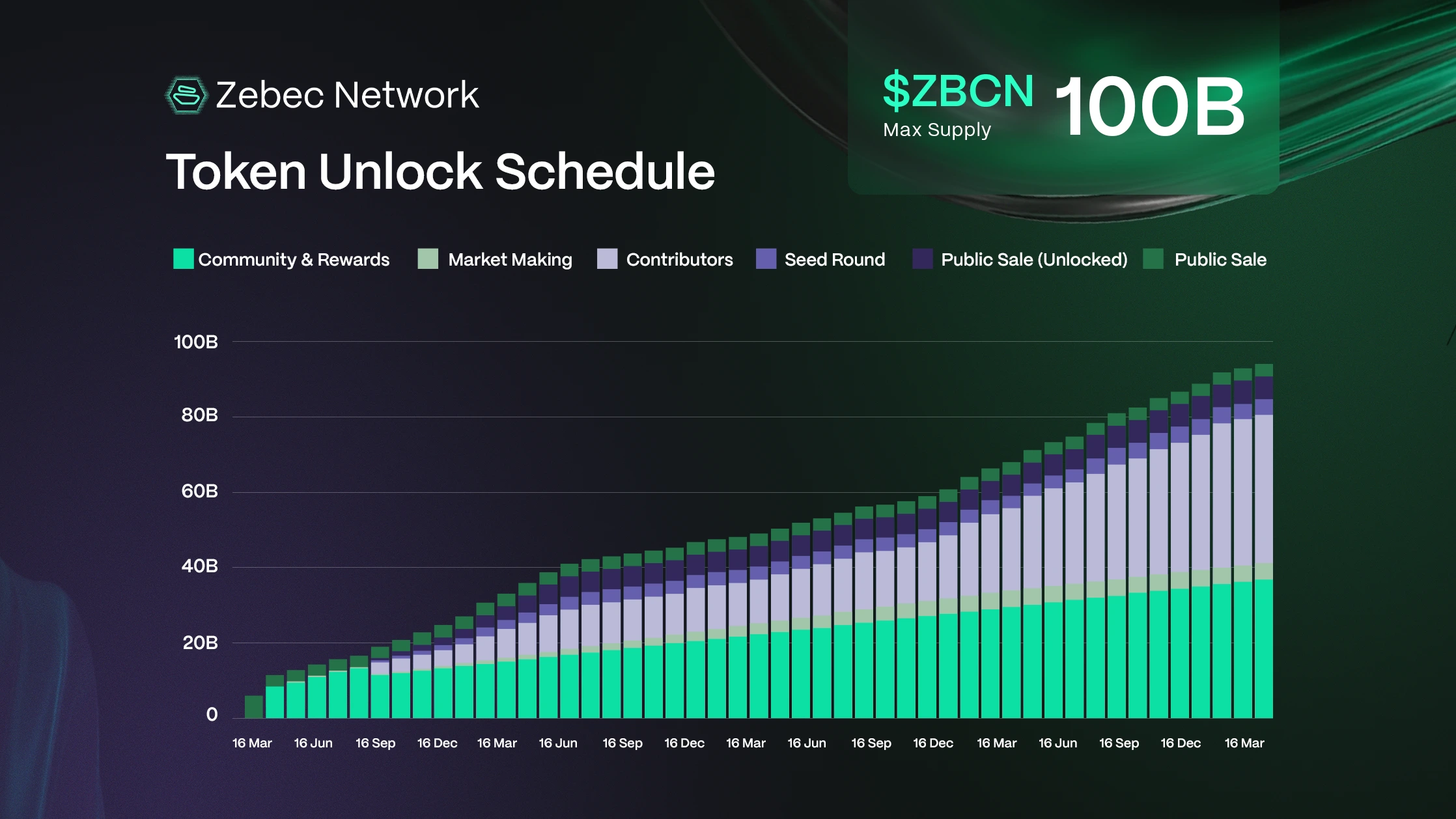
The final scheduled token unlock is set for March 2026, four years after the original token introduction. This milestone marks the conclusion of early-stage token allocations and reflects ZBCN’s transition into a more mature, utility-driven phase of the network.
Token Buybacks and Burns
The token buyback program, initiated in late 2023 with the launch of the Zebec Card Program, is linked to product revenues across payroll, cards, and partner contracts. Buybacks are executed on a regular cadence and aligned with broader financial and operating cycles.
Since the inception of the program, ZBCN buyback volume has grown at an annualized rate of over 70%, with continued growth expected as the Zebec Card program scales domestically and across new global markets in 2026. This structure ensures that supply management remains transparent, governance-led, and aligned with the long-term health and success of the network.
In summary:
With the final token unlock completed, ZBCN will operate within a fully deflationary framework, with token buybacks driving supply contraction and no new supply entering the market.
As Zebec’s payroll platform and SuperApp continue to scale, ZBCN is expected to be acquired by a growing number of employers and institutions to support participation in real-time payroll and payments.
Governance
ZBCN is the governance token of the Zebec Network, enabling holders to influence strategic, economic, and operational decisions through a hybrid governance model that combines onchain voting with structured offchain consultation.
Governance Model: Hybrid
The Zebec DAO operates under a hybrid governance framework that blends on-chain transparency with offchain consultation and deliberation. This model allows ZBCN holders to vote directly on proposals while benefiting from prior consultation, analysis, and discussion across community, investor, and partner groups. This approach reflects governance best practices adopted by mature crypto networks operating alongside regulated financial services, where proposals often span technical, commercial, and compliance considerations.
Governance Process
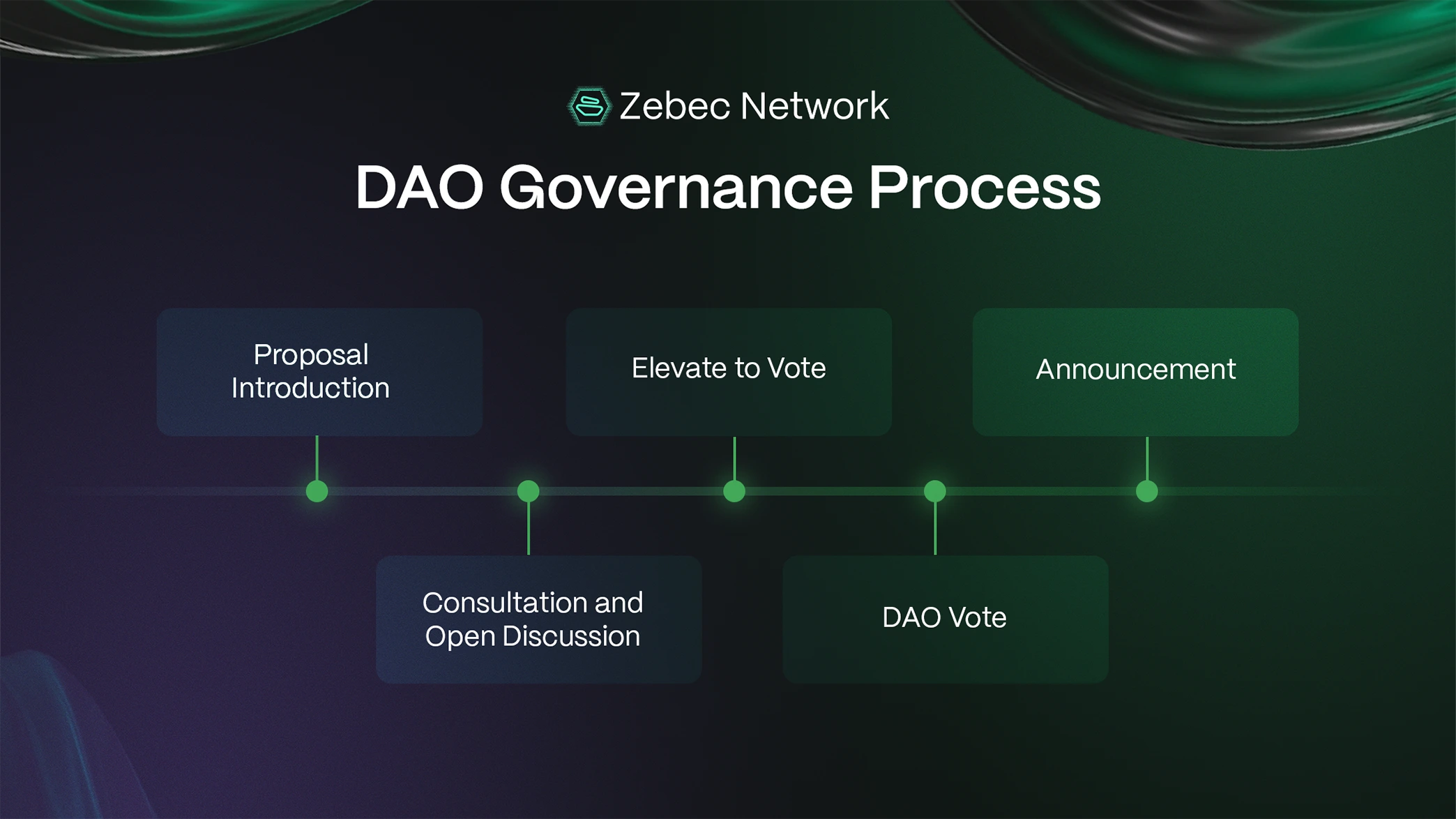
Proposals may originate from community members, ecosystem contributors, partners, or investors. Early-stage discussions take place across Zebec’s official forums and communication channels. Offchain briefings, consultations, and working sessions are summarized and published to ensure transparency and informed participation.
Proposals that demonstrate sufficient engagement and alignment proceed to an on-chain vote. Voting outcomes are recorded on-chain and communicated publicly, with approved proposals entering execution.
ZIPs (Zebec Improvement Proposals)
Zebec Improvement Proposals (ZIPs) are typically subject to a 24-hour to 7-day voting period. Addresses with voting power may vote for or against a proposal, with passage determined by a simple majority.
This structure ensures that governance remains transparent, inclusive, and deliberate while remaining responsive to network needs.
Other Articles